Accelerating our sustainability journey through
Science-based targets
The Science Based Targets initiative (SBTi) is widely regarded as the gold standard and independent authority for companies who want to set ambitious, science-based climate targets. It has mobilised thousands of organisations across industries and regions to embed decarbonisation into business strategies and align organisations with the Paris agreement’s goal of limiting global warming.
Today, more than 12,000 companies and financial institutions have committed to science-based emissions targets, collectively representing over 40% of global market capitalisation, demonstrating the initiative's influence on business and finance.
Science-based targets provide a clear pathway for reducing greenhouse gas (GHG) emissions in line with limiting global warming to 1.5°C, helping companies prevent the worst impacts of climate change and ensuring business resilience. Like all companies, we recognise our responsibility to reduce emissions from our operations and minimise the resources used to create our products. Our climate targets have been independently assessed and validated by the SBTi, underscoring our commitment to ambitious corporate climate action.
Our key goals
Explore our ambitious goals verified by the Science-based targets initiative. Here, we dive deeper into the key targets we've set, demonstrating our commitment to a sustainable future.
Reduce greenhouse gas emissions in our own operations by 90%
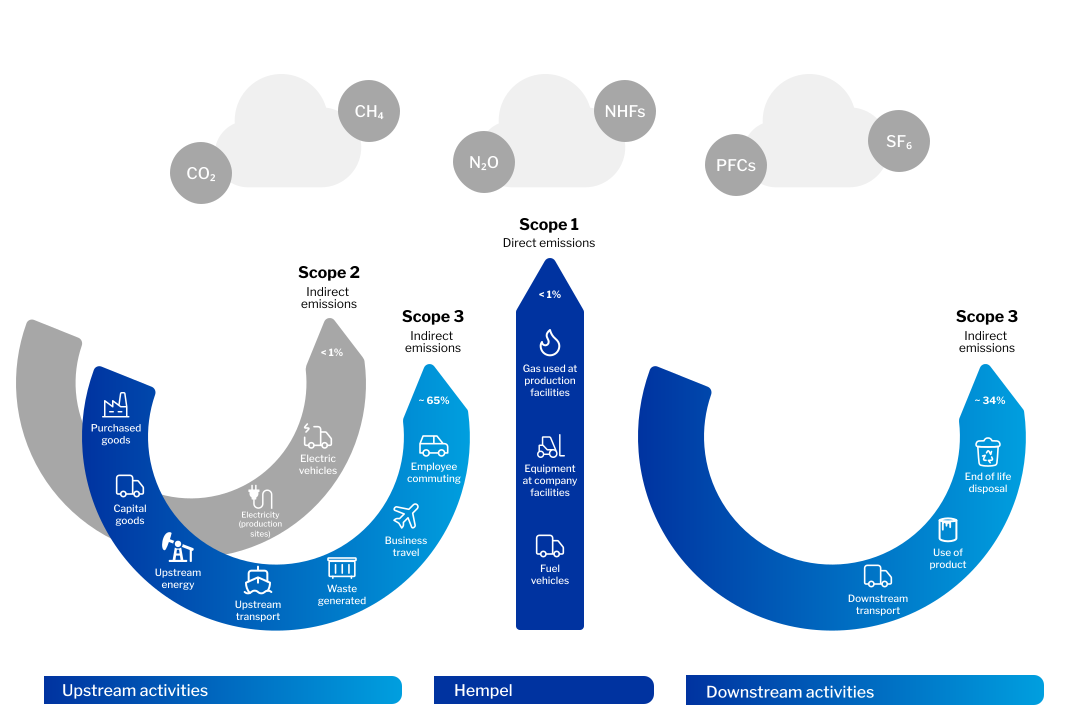
Our target is to reduce Scope 1 & 2 emissions by 90% by 2026, measured from a 2019 baseline. We have made great progress so far; by the end of 2025, we have reduced Scope 1 & 2 emissions by 70% compared to 2019.
We continue to focus our efforts around 3 key initiatives:
- Improving energy efficiency and phasing out fossil-fuel equipment at production sites
- Decarbonising our fleet
- Switching to renewable electricity
We have improved energy efficiency per litre of paint produced by optimizing energy usage and phasing out fossil-fuel and energy inefficient equipment. We have installed solar panels at suitable production sites and continue to invest in renewable electricity and certificates. Our fleet decarbonization strategy, implemented in more than 35 countries and tailored to local EV readiness, has resulted in over half of our vehicles being electric or hybrid. Looking ahead, we are expanding these decarbonization initiatives beyond production sites to include warehouses, offices and retail stores.
Reduce greenhouse gas emission intensity (GEVA) in our value chain by 55%
In 2025, we updated our SBTi targets to achieve a 55% reduction in the intensity of our Scope 3 emissions per euro value added (GEVA) by 2030. This target update reaffirms our ambition to align with the 1.5°C pathway while offering a more accurate reflection of our business growth. We work towards reducing our Scope 3 intensity through two key initiatives:
- Working with our suppliers in order to source raw materials with lower product emissions
- Understanding our customers and providing them with products to enhance efficiency, durability and product use
Looking for something more?